Tokyo Weather in April: A Practical Guide
A practical look at Tokyo weather in April, covering long-term temperature and rainfall averages, cherry blossom timing, packing advice, and where to stay.
Quick answer
Tokyo weather in April brings mild days averaging 20°C, cool nights near 11°C, and about 126 mm of rain across the month, based on long-term averages. Early April often overlaps with cherry blossom season.
Key takeaways
- Tokyo in April averages a 20°C high and an 11°C low, long-term averages from Open-Meteo
- About 126 mm of rain falls across April, more than February but less than the June rainy season
- Sunshine averages about 8 hours a day, similar to most months in Tokyo
- Early April often overlaps with cherry blossom season, though exact timing varies by year
- Layer clothing: mornings and evenings are noticeably cooler than midday highs
Tokyo weather in April is mild and changeable: long-term averages put the daytime high around 20°C and the overnight low near 11°C, with about 126 mm of rain spread across the month. Sunshine averages about 8 hours a day, similar to most of the rest of the year.
April sits in the spring shoulder season, warmer than the cool, drier months of January through March but not yet into the humid, wetter stretch that builds from late May onward. A single week can still feel quite different from the next, so flexible layers matter more than any single outfit, and it helps to check a short-range forecast once your dates are close rather than relying only on the monthly picture below.
How warm is Tokyo in April?
Daytime temperatures average around 20°C, up from an average high of 15°C in March, and still short of May's average high of 23°C, based on long-term Open-Meteo climate normals. Nights are noticeably cooler, averaging about 11°C, so the gap between afternoon warmth and early-morning chill can be close to nine or ten degrees.
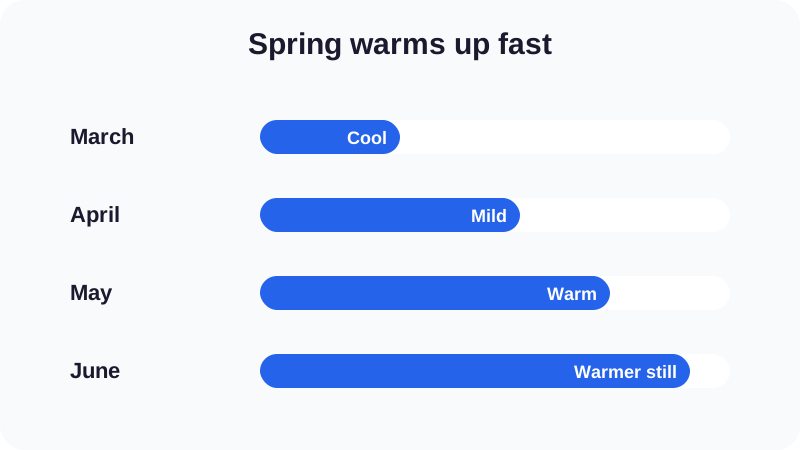
Because the jump from March to April is large, travellers arriving straight from a colder climate sometimes overpack heavy coats and then find the middle of the day too warm for them. A lighter mid-layer that can be added or removed through the day works better than one thick jacket. For how April stacks up against every other month, including the three months the Travel City Index rates highest for climate, see the Tokyo index page.
Does it rain much in Tokyo in April?
April brings about 126 mm of rain over the month, long-term averages show, more than the roughly 45 mm typical of February but well under the near-240 mm that falls during Tokyo's June rainy season. Rain in April tends to arrive as showers that pass through rather than settling in for a full day, so outdoor plans are rarely washed out completely.
Because showers are usually short, it is worth building some flexibility into an outdoor-heavy day: a garden, a shrine walk or a market visit can often be shifted an hour or two without losing much, and an indoor backup such as a museum or a covered shopping arcade is easy to find in most central neighborhoods.
Is April cherry blossom season in Tokyo?
April is widely associated with cherry blossom season in the city, though exact bloom and peak-viewing dates shift from year to year and cannot be read off a climate average. Mild April temperatures and a mix of sun and showers are part of why the season draws so many visitors, but the blossoms themselves follow their own short, weather-sensitive timeline each spring, sometimes arriving earlier or later than the typical early-April window.
If blossoms are the main reason for your trip, building in a few flexible days around your core itinerary gives you a better chance of catching them near their peak, rather than fixing every day in advance.
What should you pack for Tokyo in April?
- A light jacket or sweater for cool mornings and evenings.
- A t-shirt or light top for milder afternoons, since the daytime average sits around 20°C.
- A compact umbrella — showers are common but rarely last all day.
- Comfortable walking shoes, since most sightseeing in Tokyo means walking between train stations.
- A light scarf or extra layer if you are sensitive to the cooler air first thing in the morning.
- A small daypack with room to stash a removed layer once the afternoon warms up.
Where should you stay in Tokyo for an April trip?
Areas along the JR Yamanote loop line, such as Shinjuku, Shibuya and Ueno, keep most sights and transfers within a short train ride, which matters on days when a shower makes you want to duck indoors quickly. Ueno sits close to one of the city's largest parks, a popular cherry blossom viewing spot in season, while Shinjuku and Shibuya have the widest range of accommodation and the most late-night dining options.
For a wider view of how Tokyo compares with other cities worth visiting in the same month, see the best cities to visit in April ranking, and for how Japan's other major cities fit into an April trip, check the Japan country page.
How do you get from the airport and get around in April?
Tokyo is served by Narita and Haneda airports, both connected to the city centre by train lines that run roughly every ten to twenty minutes during the day; journey times vary by airport and line, so check the operator's current timetable before you travel. Inside the city, the Yamanote loop line and the subway network cover almost everywhere a first-time visitor needs to go, and April's mix of sun and rain makes a transit map more useful than a walking-only plan for longer crossings.
A rechargeable transit card is generally the simplest way to move between lines and operators without working out separate tickets for each trip, and it also covers many convenience store and vending machine purchases around the city.
How many days should you plan for a Tokyo trip in April?
April's mild, changeable weather suits a flexible itinerary rather than a tightly packed one, since a rainy afternoon is easy to redirect toward an indoor museum or a covered shopping street. Visitors who want to pair city sightseeing with a day trip toward Kyoto or another nearby city should allow an extra buffer day, since spring showers can occasionally shift a travel day by a few hours.
On cash and tipping: carrying some cash alongside a card is still common practice in Tokyo, and tipping is not customary in restaurants, taxis or hotels. Rather than fixing a hotel budget or safety plan here, check the Tokyo city page for the index's cost and safety details alongside its month-by-month climate scores.
Frequently asked questions
Is April a good time to visit Tokyo?
Many visitors find April comfortable: daytime highs average around 20°C and rain, while present, tends to fall in showers rather than all day. The Travel City Index lists Tokyo's strongest climate-score months as May, June and October, so April sits just outside the top window but is still a mild shoulder-season choice.
Does it rain a lot in Tokyo in April?
April averages about 126 mm of rain for the month, long-term figures show. That is more than the roughly 45 mm typical of February but well short of June, when Tokyo's rainy season pushes averages much higher. Expect intermittent showers rather than continuous rain.
What should I pack for Tokyo in April?
Pack layers: a light jacket or sweater for mornings and evenings, a t-shirt or light top for warmer afternoons, and a compact umbrella for passing showers. Comfortable walking shoes matter too, since most sightseeing in Tokyo involves walking between train stations.
Is early April the best time to see cherry blossoms in Tokyo?
Early April is widely associated with cherry blossom season in the city, but exact bloom and peak-viewing dates shift from year to year and cannot be predicted from climate averages. Check seasonal bloom forecasts closer to your travel dates rather than relying on a fixed calendar date.
How does Tokyo in April compare to March and May?
April is warmer and wetter than March, when the average high is around 15°C, and cooler and drier than May, when the average high reaches about 23°C with higher rainfall. April sits in between as a transitional spring month.
Climate figures are long-term averages, not a forecast. Fares, schedules and local rules change — check current official sources before you travel.